Project Management
Page updated: 23/10/2026
We have developed a corporate approach to managing projects that is based on sector best practice. The toolkit is intended to be used in the knowledge that there is no ‘one size fits all’ approach, but a core set of principles always apply.
Projects will:
- be linked to a corporate programme and/or the corporate Pillars
- have a valid Business Case
- have clearly defined roles and responsibilities within the context of the project
- clearly define a shared understanding of what the project is setting out to achieve, by when and with what resources
- make efficient and effective use of resources and funding
- adhere to regular monitoring and control mechanisms
The toolkit is designed to provide guidance to everyone that is involved in a project, to clarify roles and responsibilities and provide structure for the planning, delivery and closure of projects. The toolkit is designed to be scalable; the Project Type Matrix (Stage 1) will help you to decide the level of controls to be used with your project.
The toolkit has been adopted as the Corporate approach to managing projects, all projects are expected to use the toolkit. In exceptional circumstances the Chief Executive or a Director may agree that it is not possible or appropriate to apply the toolkit processes.
When the toolkit is not applied, there is an increased risk that the project will not be thoroughly planned, monitored and controlled, and therefore has a higher risk of not fulfilling its objectives. The Chief Executive or Director should authorise the exception by signing the Form to Authorise Non-Use of the Project Management Toolkit to ensure the risks are understood and accepted. The signed Pro Forma should be retained in the project file for Audit purposes.
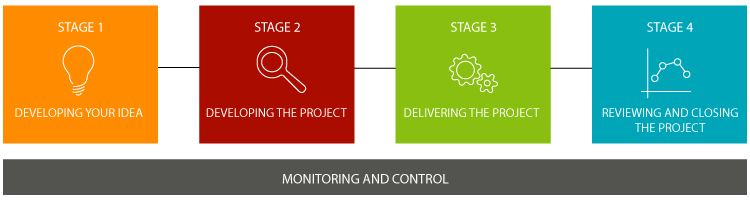
The toolkit has been designed around the following four stages of Project Management; Developing an Idea, Developing the Project, Delivering the Project and Reviewing and Closing the Project. Monitoring and Control takes place throughout the Project Management Process. Each stage has been broken down into a series of steps for you to follow. The steps within each stage may be undertaken in a different order to the one presented in this toolkit.