Sustainability Stories
Page updated: 08/10/2026
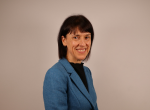
Wendy Walters
What is your role in the Council and what does sustainability mean to you?
As Chief Executive, my role is to provide strategic leadership for the Council, ensuring that we deliver high-quality services, make the best use of public resources and work with partners to improve outcomes for our communities. I am responsible for helping the organisation achieve its long-term vision while balancing social, environmental and economic priorities.
To me, sustainability is about making decisions today that meet the needs of current generations without compromising the ability of future generations to meet their own needs. It means creating resilient communities, protecting our environment, supporting a strong local economy and ensuring that public services remain effective and affordable in the years ahead.
How do you feel sustainability features in your work role?
Sustainability is a key consideration in almost every aspect of my role. Whether we are developing policies, investing in infrastructure, planning services or managing our estate, we must consider the long-term environmental, social and financial impacts of our decisions.
As Chief Executive, I have a responsibility to ensure sustainability is embedded across the organisation rather than treated as a standalone issue. This includes supporting our net zero ambitions, promoting sustainable travel and procurement, encouraging innovation and ensuring that climate considerations are reflected in our strategic planning and decision-making processes.
What aspect of the environment means the most to you and why?
The aspect of the environment that means the most to me is protecting and enhancing our natural resources for future generations. This includes our green spaces, biodiversity, rivers, coastline and countryside.
These environmental assets are fundamental to the health and wellbeing of our communities, contribute to economic prosperity through tourism and recreation, and play a vital role in tackling climate change. I believe we have a responsibility to be good custodians of the environment so that future generations can enjoy the same benefits that we do today.
What do you do at work/home to be more sustainable and help protect the environment?
At work, I encourage digital working practices to reduce paper consumption, support virtual meetings where appropriate to reduce travel and promote efficient use of energy and resources across the organisation.
At home, I try to make conscious choices to reduce my environmental impact. This includes recycling, reducing waste, conserving energy and water, supporting local businesses where possible and choosing sustainable travel options whenever practical. While no individual can solve environmental challenges alone, small actions taken consistently can make a meaningful difference.
What advice would you give to someone wanting to be more environmentally friendly?
My advice would be to start small and focus on changes that can be sustained over time. People can sometimes feel overwhelmed by the scale of environmental challenges, but every positive action counts.

Sian E Williams
What is your role in the Council and what does sustainability mean to you?
I’m a Development Management Assistant within the Minerals & Waste Team, dealing with the processing of planning applications for minerals and waste sites and also carrying out monitoring of the ongoing development of minerals sites.
It’s a bit of a textbook answer, for which I make no apologies as I can’t think of a better way of putting it! But sustainability to me is about providing for the needs of today without compromising the needs and wellbeing of future generations. It’s about having regard for the future in everything we are doing today.
How do you feel sustainability features in your work role?
Sustainability plays an integral part of our role in Minerals and Waste as well as the wider planning team. In Minerals & waste specifically, we place a strong emphasis on the restoration of minerals sites which is considered early on in the planning stage, before any spade has even entered the ground! By their very nature, quarries, mines and waste sites have changed the landscape in which they’re located but that doesn’t need to be a negative thing. Often this means creating new habitats and I see this often when on my site visits. Minerals sites are temporary developments which often have to, by way of their planning permission, be restored after their use. Even while operational, quarries can provide a home to a diverse range of species which most quarry operators are more than happy to work around. We also strongly encourage the production/ processing of secondary and recycled aggregates at minerals sites which decreases reliance to some extent on the working of virgin reserves and supports the circular economy. What was once considered discard at minerals sites years ago can now be put to use in various industries thanks to improvements in technology, which is great to see!
What aspect of the environment means the most to you and why?
My view is that the environment isn’t made up of many different elements in isolation but rather, is a system made up of components which are inter-connected. Each one is as important as the other and if one is affected, it has a knock on effect for all the others. There’s a fine balance to be kept and its about maintaining that balance within each component. I guess if I had to pick one it would be climate change, as that is the starting point for so many other elements of the environment which so many species depend on.
What do you do at work/home to be more sustainable and help protect the environment?
Well, I have a fully electric car and use an ethical supplier for my energy use. I also love my gardening – have a wild, unmown area in my garden, have planted flowers and trees for pollinators and have dug a wildlife pond which has probably been my favourite and most rewarding garden project, as well as growing a wide range of fruit and veg.
What advice would you give to someone wanting to be more environmentally friendly?
There are so many small things we can all do, which can add up to make a real difference! No matter what the size of your garden is, whether you even have a garden! whether you live in town or country just start with one thing and see where that takes you. Future generations will thank you for it!
More from Climate Action Carmarthenshire